One of the questions I hear regularly at art shows is, “Did you paint that?” People will look closely at one of my prints, notice the colors and details, and assume that I painted the image directly onto paper. Then, when I explain that it is a linocut, I often get a second question: “So is it a print?” The answer is yes, but probably not in the way they mean.
When many people hear the word “print,” they think of a reproduction. They picture a photograph or scan of an original painting that gets printed onto paper, with the original artwork existing somewhere else. My linocuts do not work that way. The print is the original artwork.
What Is an Original Linocut Print?
A linocut is a type of relief printmaking in which I carve an image into a block of linoleum. I ink the raised surface of that block with a brayer, place paper over the inked block, and apply pressure to transfer the image onto the paper. The resulting impression is an original print because the physical process of carving, inking, and printing creates the artwork itself.
The linoleum block acts as the matrix, or surface, for the image. I do not create a painting first and then reproduce it as a print. I create the image specifically for the block, and the image comes into existence on paper through the printing process.
That distinction matters when you are looking at original art.
Is a Linocut a Reproduction?
My linocuts are not reproductions. I do not scan my original prints and sell copies made from a printer, and I do not offer reproductions of my artwork.
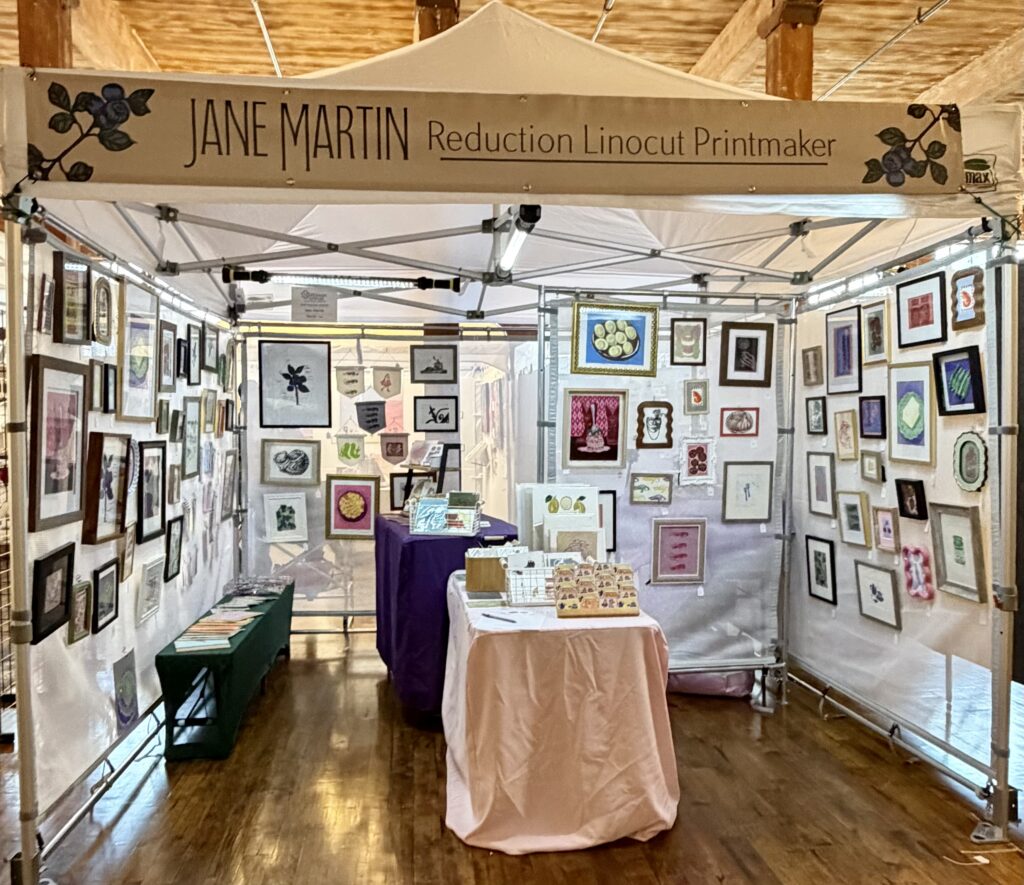
Everything you find inside my booth comes directly from my printmaking process. I hand-carve the block, apply the ink with a brayer, and press the image onto paper myself using my hands, a tortilla press, or a cold press laminator.
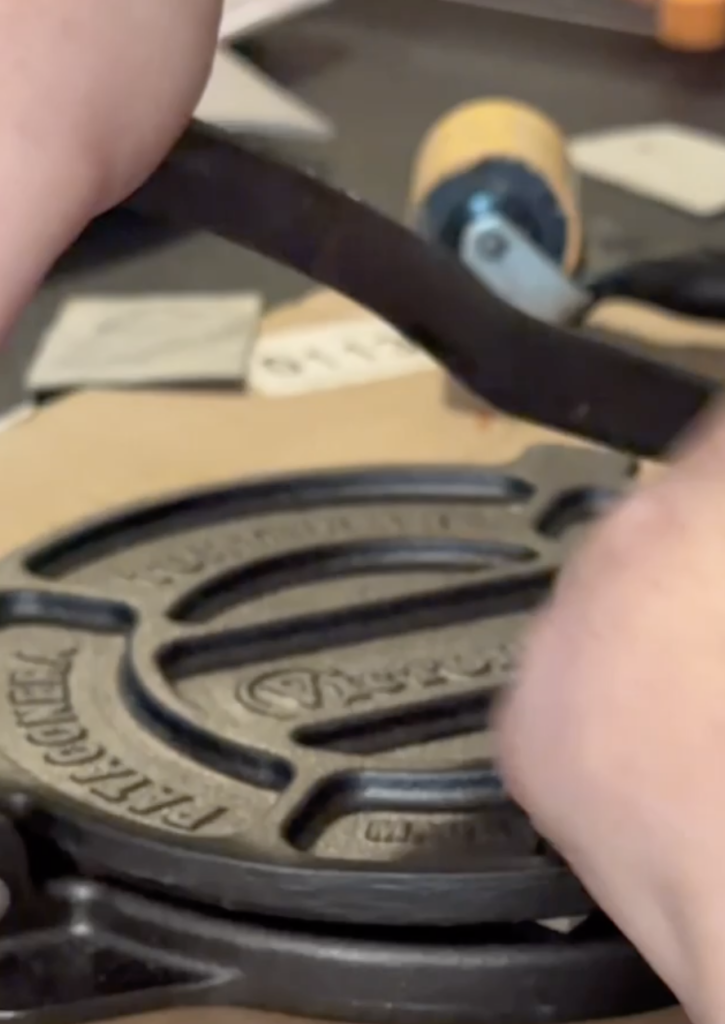
The equipment may change depending on the size and needs of the print, but the basic process stays the same. I create the carved block, ink the block, place the paper, apply pressure, and make the impression. I do not send the artwork away to be reproduced by a commercial printer.
What Does “Hand-Pulled Print” Mean?
Printmakers often use the phrase “hand-pulled print” to describe an impression made through a hands-on printing process. The exact tools can vary, but the important part is the physical interaction between the artist, the inked linoleum surface, and the paper. The artist controls the printing process rather than simply sending a digital image to a printer.
I use several methods to apply pressure to my blocks. Sometimes I use my hands, sometimes I use a tortilla press, and sometimes I use a cold press laminator. Each method lets me transfer the ink from the carved block onto the paper without turning the artwork into a digital reproduction.
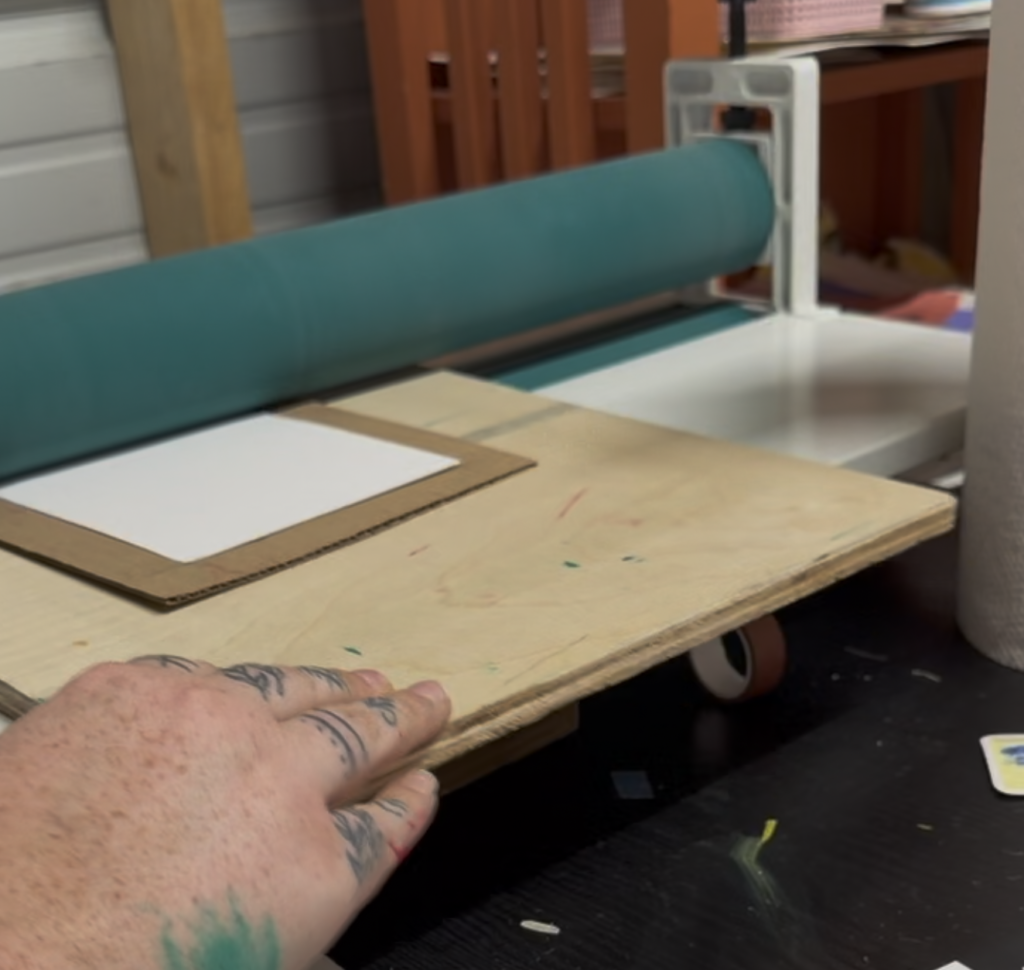
The process also creates small variations between impressions. Ink can roll onto the block a little differently, pressure can change, and paper can receive the ink in slightly different ways. Those differences come from the physical nature of printmaking, and I consider them part of what makes an original hand-printed work an original hand-printed work.
How Are Linocut Prints Made?
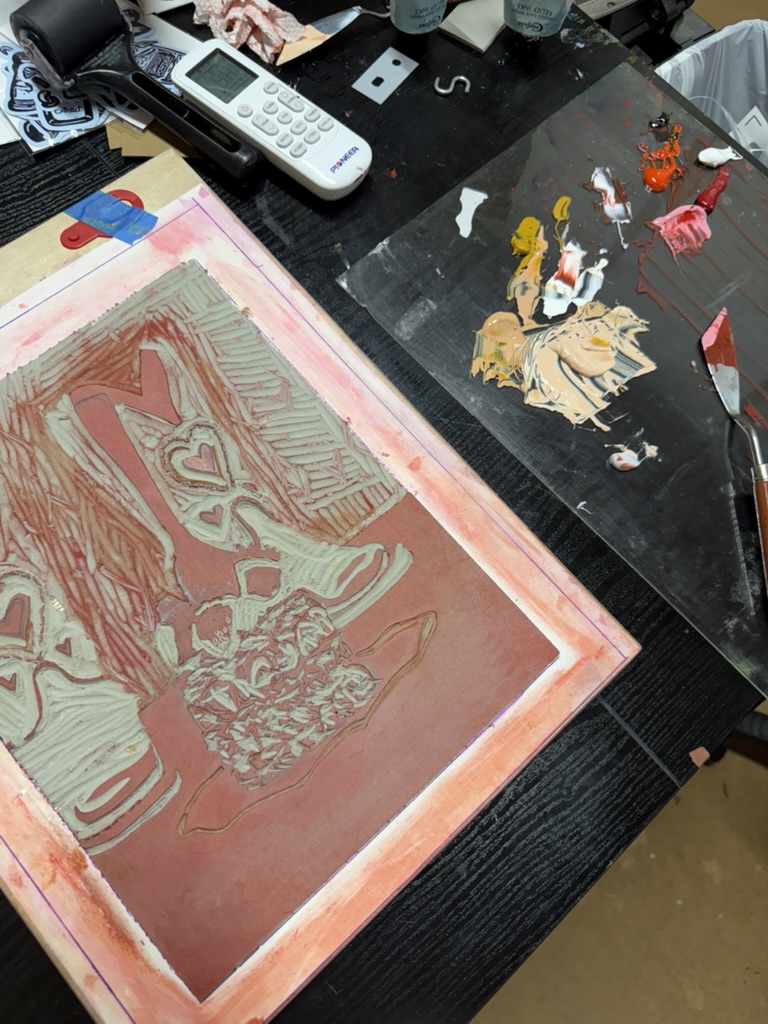
I start a linocut by creating an image and transferring that design to a piece of linoleum. I carve away the areas that I want to remain the color of the paper or reveal previous layers, leaving the raised areas to receive ink. The block becomes both my printing surface and the physical record of the decisions I make throughout the process.
I then roll ink across the surface of the block with a brayer. The brayer distributes ink across the raised areas while leaving the carved areas without ink, which allows the design to appear when I press the block onto paper. I repeat that process for every impression I make.
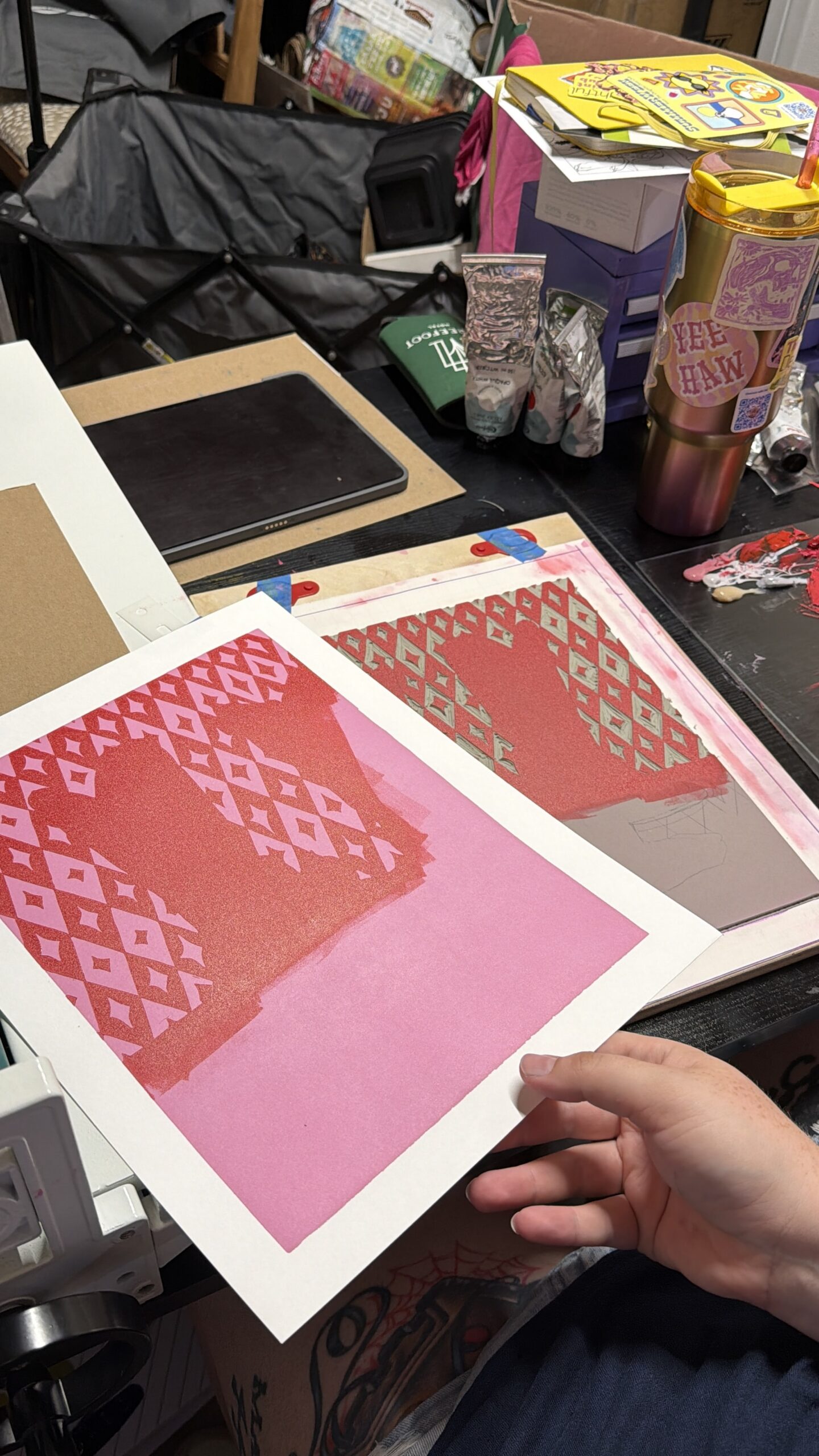
My reduction linocuts take this process even further. I use the same block to build an image through multiple colors, carving away more of the block after each printed layer. Every carving decision permanently changes the block, so the final image develops through a sequence of printing and carving rather than through a single digital or mechanical reproduction.
Why Does Every Original Print Look Slightly Different?
Handmade prints can have subtle differences between impressions. One print might receive slightly more ink in an area, while another might show a small variation in pressure or paper texture. Those differences do not mean that one print is fake or defective. They show that a person made the impression.
The physical process creates variables that a digital printer does not have in the same way. The amount of ink on the brayer, the pressure used to print, the texture of the paper, and even the conditions in my studio can influence the final impression. Humidity and temperature can affect my materials and drying times, so even the Mississippi weather occasionally gets a tiny vote in how a print turns out.
I do not try to remove every trace of the handmade process. I want the print to look intentional and well made, but I also want it to retain the evidence that a person carved the block and made the impression.
What Does an Edition Mean in Printmaking?
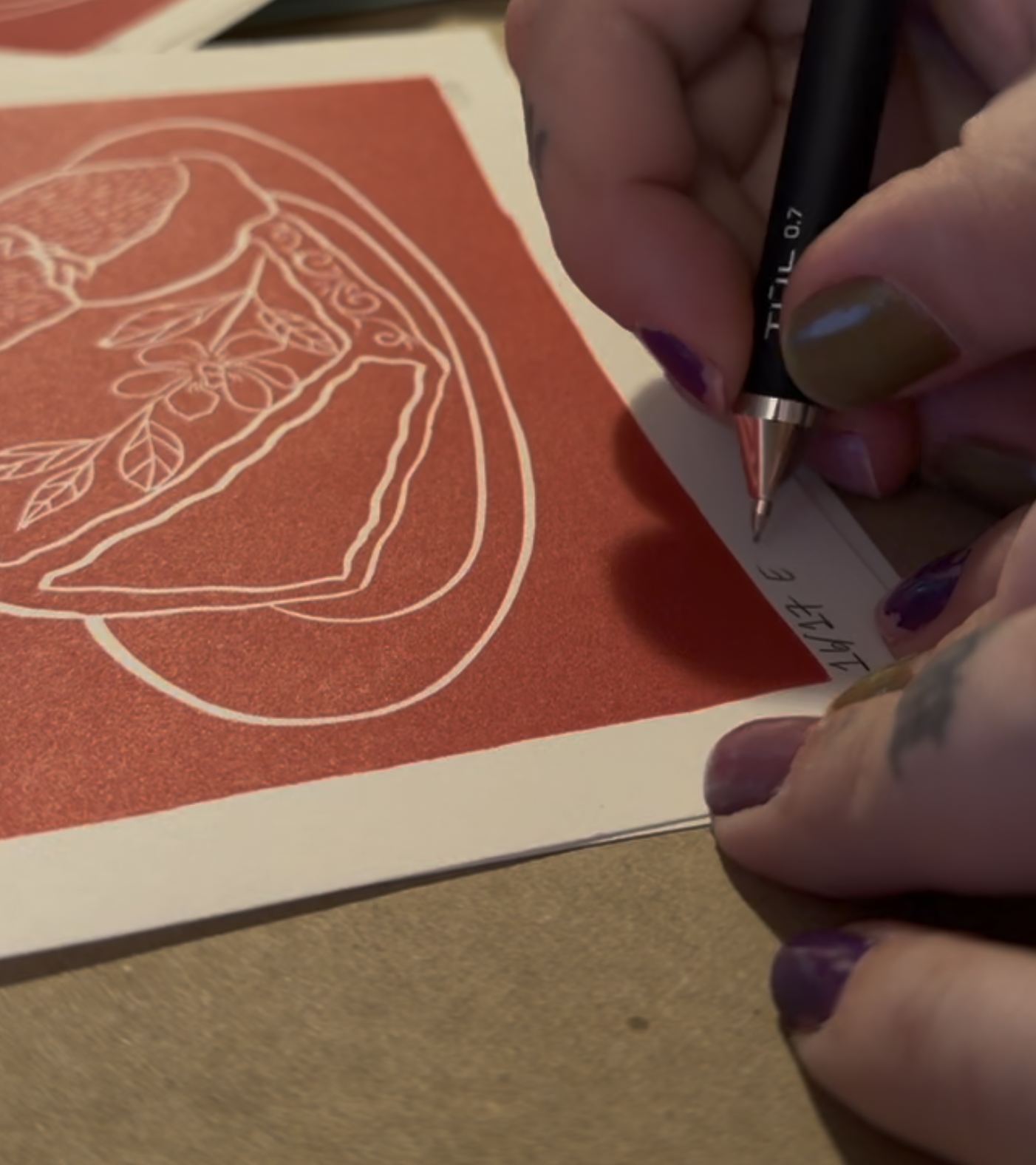
Printmakers can create multiple original impressions from the same carved block. We call those impressions an edition when the artist establishes a specific number of prints in the series. An edition allows more than one person to collect an original print while keeping the process and quantity defined.
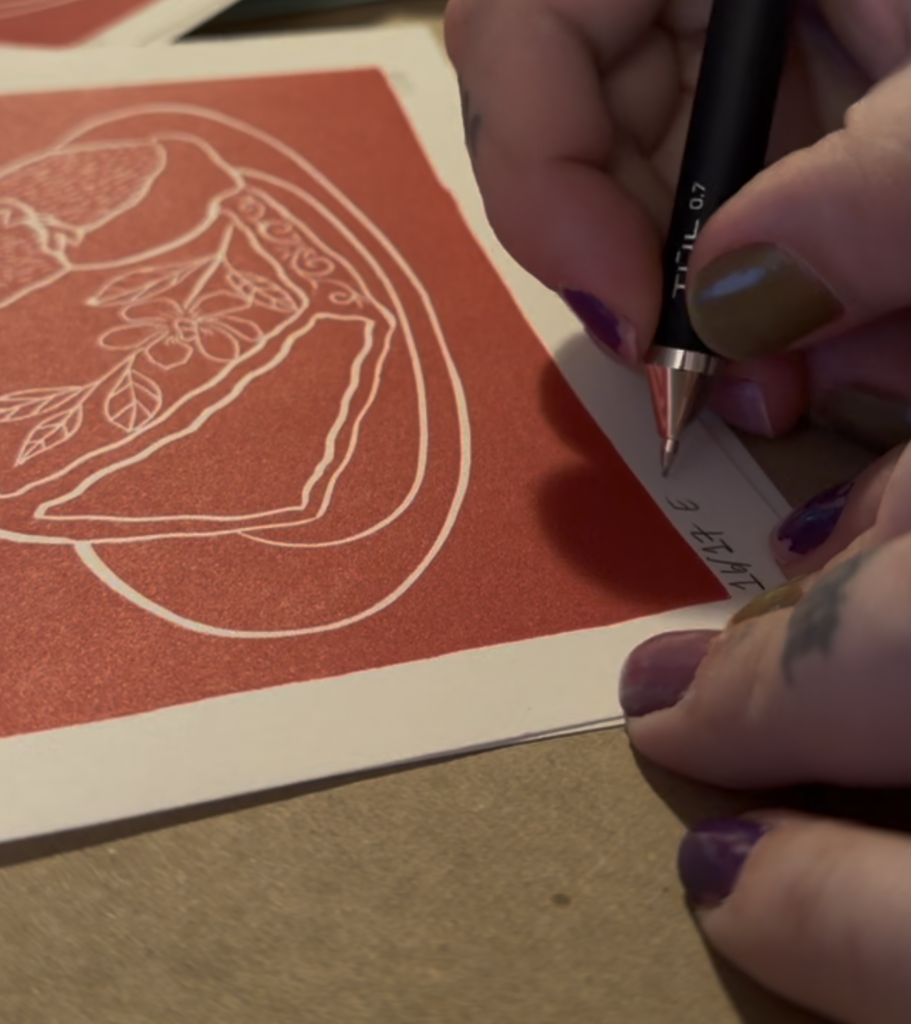
For example, if I create an edition of 17 prints, I might number them 1/17, 2/17, 3/17, and so on. The first number identifies that particular impression’s place in the edition, while the second number tells you the total size of the edition.
An edition of 17 does not mean that I made one original artwork and then produced 16 copies. Each impression comes directly from the original carved linoleum through the physical printmaking process. The prints share the same carved block, but each sheet becomes an original impression.
Are Linocut Prints Considered Original Art?
Yes. An original linocut belongs to the tradition of original fine art printmaking. The artist creates the lino design, controls the printing process, and produces the final artwork through that process rather than reproducing an existing finished image.
Printmaking has a long history as a fine art medium. Artists have used relief printing, intaglio, lithography, screen printing, and other printmaking processes to create original works of art. The fact that an artist can create multiple impressions does not make those impressions reproductions.
The medium simply allows the artist to create more than one original impression.
Why I Do Not Sell Reproductions
I have made a deliberate choice not to offer reproductions of my work. When you find one of my prints at a show, you are looking at something that came through my hands from the beginning of the process to the finished impression.
I carve the block myself. I ink it myself, and I print it myself. I make the decisions about the color, pressure, paper, registration, and every other part of the physical printing process.
That distinction matters to me because I want the work I sell to represent the actual practice of printmaking. I do not want to make a digital copy of a print and call that the same thing as the original. A reproduction can certainly be beautiful, but it is a different object created through a different process.
Why Does an Original Linocut Cost Less Than a Painting?
People sometimes assume that a print should cost less because an artist can make multiple impressions. The price of an original print, however, reflects much more than the number of pieces that come out of the process. It reflects the artist’s design, carving time, materials, printing time, edition size, experience, and the physical work involved in creating each impression.
A linocut can have a lower price point than a painting while still being an original work of art. The difference comes from the medium and the way the artist creates the work, not from one being original and the other being a copy. An original print is still an original piece of art.
I think this distinction becomes especially important when you are building a collection. An original linocut gives you an artwork that came directly from the artist’s carved block and printing process. You are not buying a picture of the artwork; you are buying the artwork created through printmaking.
What You Are Actually Buying When You Collect a Linocut
The physical LinoPrint Process
You might see evidence of that process when you look closely. You might notice slight variations in ink coverage, tiny differences in the impression, or the texture of the paper showing through the ink. Those details remind you that the print did not come out of a machine as a picture of something else.
Decisions for Carving and Inking
The print is the thing. That is what I love about relief printmaking. I can create multiple impressions from one carved block, but each impression still comes from the physical act of making the artwork. Every time I ink the block and press it onto paper, I create another original impression by hand.
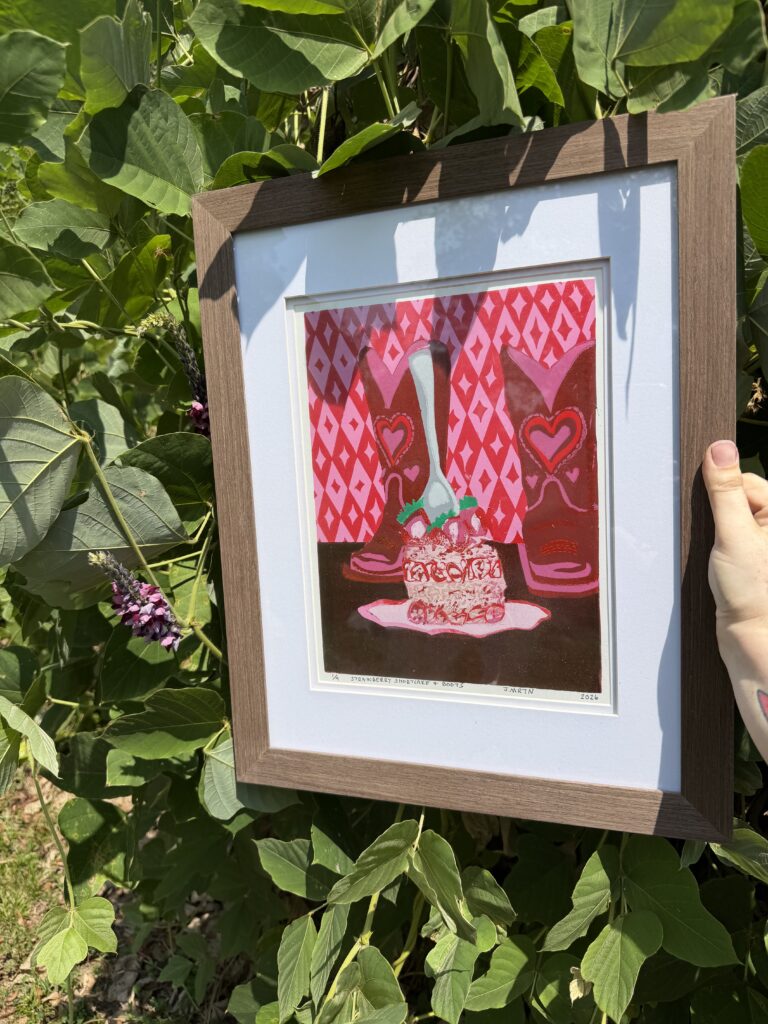
From linoleum and ink to finished artwork
It is an original print. I carved it, inked it, and pressed it onto paper myself. The image exists because the block met the ink, the paper, and pressure, and the finished piece carries the physical evidence of that process with it.
Shop this post
Like the artwork? Buy it now!